
6 min read
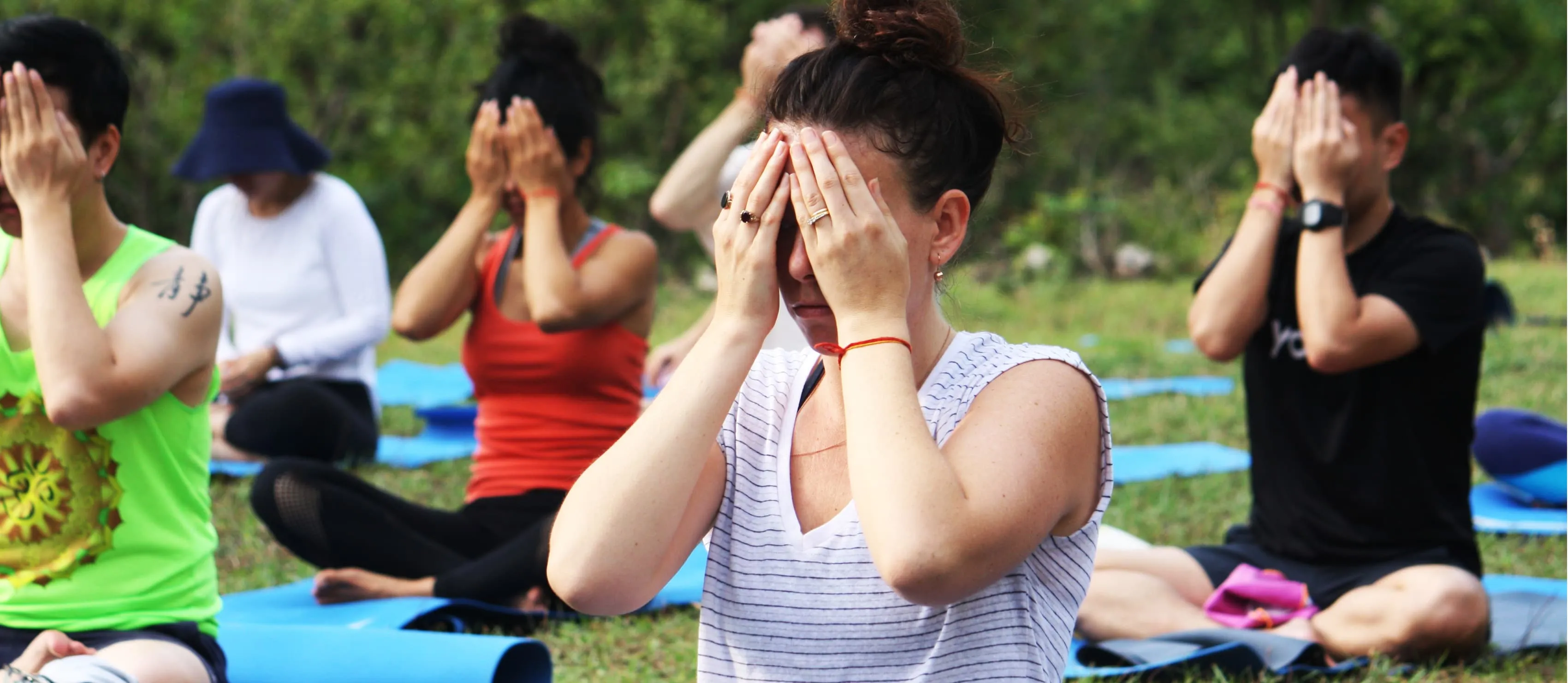
This month we will focus our theme on Dhyana - meditation. This is the journey of moving from effortful focus (Dharana) to effortless, continuous awareness (Dhyana), where the mind remains steady without interruption. Dhyana - the seventh limb in the eight limbs of yoga is all about keen awareness without focus. Moving from doing to being. Maintaining the same intensity of awareness, the attentive awareness moves from one-pointed concentration to no-pointed attentiveness.
It is moving to a state of non-focus and ability to become one with either the object you are using as the focal point of your meditation or simply the body and the breath.
Think of a time or an experience where you found yourself so immersed in something - it could be listening to a piece of music or a stunning natural view on holiday - or so concentrated in doing something you love that you forget your surroundings. That is Dhyana, the focus of the mind on one object or activity without interruption.
When you first start practicing meditation, you discover how easy it is to be distracted by all the other thoughts and emotions that move around constantly in your mind. With meditation the journey to stillness requires a lot of patience and daily continual practice. Patanjali defines yoga as the cessation of fluctuations of the mind.
Dhyana is the continuous flow of attention toward one object.
Meditation is a process of getting to know your mind, paying attention to what’s going on inwardly. It is a way to enter the quiet already present beneath daily mental chatter. It can take a great deal of time to learn how to gently quieten your thoughts and feelings.
At the start, you may only experience Dhyana for a few uninterrupted moments, but with practice you can lengthen this time. To prepare for Dhyana focus and concentration is needed, which is Dharana.
Dhyana, a Sanskrit word meaning “contemplation and meditation,” is the seventh limb of yoga in the Ashtanga yoga system, also known as the eight-limbed path. These eight steps basically act as a guideline on how to live a meaningful and purposeful life. The term Dhyana derives from the two Sanskrit root words-dhi, which means “mind,” and yana, which means “moving.” Dhyana may also originate from the Sanskrit word dhyai, which means “to think of.”
Dhyana builds upon previous limbs that we have worked through this year in classes, asana (physical posture), pranayama (breath control), pratyahara (control of the senses) and dharana (concentration). Although Dharana which we looked at last month and Dhyana seem similar, they are subtly different. While Dharana teaches us a one-pointed focus, encouraging us to concentrate all of our attention onto the breath, or a sound, or a visualisation, Dhyana brings about keen awareness without the focus.
Kirsty Tomlinson a yoga teacher says “Therefore, instead of meditation being something you actively DO, it becomes a state of being. The line between what you’re doing (breathing / repeating a mantra / using a light visualisation) becomes blurred and the separation between you and whatever it is you’re focusing on disappears.
Just as the word ‘yoga’ means to ‘yoke’ or ‘union with,’ the practice of ‘true’ meditation - the state that’s reached where you forget that you’re ‘meditating’ - during Dhyana our thoughts, emotions and desires subside and our state of doing merges with our state of being…. The subject and object become one.”
With the use of Dharana (concentration) throughout the yoga practice, you may now find more space within you. In our everyday life we can experience a deep sense of inner peace, clarity and a deeper sense of unity with your higher self.
Dhyana is the final step to conquer before achieving samadhi (enlightenment), the eighth limb and the ultimate destination on the path of yoga.
In daily life we can set time aside each day to sit quietly and focus on your breath, a mantra, an affirmation, a visual focus point or a calming visualisation. Try to incorporate moments of mindfulness into everyday activities such as eating or walking. You can use Dhyana to calm the mind during moments of stress. In today’s busy world, Dhyana offers a refuge of stillness and clarity. It provides a powerful tool for managing stress, enhancing focus, and fostering emotional resilience.
Meditation is bringing the mind home.
According to B.K.S. Iyengar’s Light on Yoga, we are ready to practice dharana once “the body has been tempered by asanas, when the mind has been refined by the fire of pranayama, and when the senses have been brought under control by pratyahara.
This month we will focus our physical practice on working with hip connected poses and movements that will create space around the hips that will help us to sit more comfortable towards the end of the practice when we find stillness. There are many various seated positions that can be used to meditate and through yoga practice we can find a steady, comfortable seat to move into stillness.
To work towards Dyana we must first come back to Dharana and finding a point of focus first. Dhyana is the practice of maintaining Dharana for longer periods of time. We can return to this point of focus anytime thoughts or distractions come into our awareness. The rest happens naturally when we are ready for that stage. With time and focus, dharana will naturally turn into Dhyana (meditation). A state of quiet observation and flow that exists without need for the object of focus.
Dhyana - Meditation
Week 1 - Cultivating Dhyana Through Asana - Poses
Dhyana can be woven into the physical practice by emphasizing unwavering focus and alignment.
Week 2 - Internal Sensations - Breath
Synchronising movement with breath to maintain a steady stream of awareness to help reduce mental chatter and distractions. A simple practice can be being mindful of each individual inhale and exhale of breath during your yoga practice.
Week 3 - Choose A Visual Focal Point - External Focus
Maintaining concentration on one physical thing can help the mind to stay focused and present. Objects to focus on could be a candle flame (trataka), a dot on the wall, or a point of focus of the body.
Week 4 - Mantras
Recite simple mantras while synchronising with breathing to help quiet the mind and prepare it for deeper meditation. Mantra is a form of meditation using a sound, word, or phrase.
Related Videos
Wind Down, Calm & Meditate
Guided Relaxation for Savasana
Restore, Relax
This Month’s Music
Here’s a selection of the music that Vicky has been enjoying this month.
| Artist | Title |
|---|---|
| Suyana and Shastro | Flight of The Swans |
| Imee Ooi | Om Mani Padme Hum (Zen) |
| Johanna Beekman | Om Mani Padme Hum |
| Krishna Das | Lokah Samastah Sukhino Bhavantu |
| Uma Sibey | Om Shanti |
| Gaiea Sanskrit | Aum |
| Daphne Tse | Om (Sonic Savasana) |
Recommended Books
Chakra Yoga - Anodea Judith